|
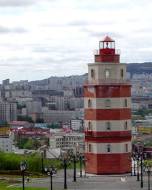 Located on Kola Bay, Murmansk enjoys two unique distinctions. It is Russia's sole ice-free port and it is the only city found north of the Arctic Circle. While Russia occupied the Kola Peninsula as early as the 17th century, Murmansk itself dates to the last years of the Tsarist Empire. The city was founded on October 4, 1916, as the administrative centre of the Kola Peninsula. Murmansk remains a vital strategic centre in the 21st century. During World War II, the city served as the Soviet Union's lifeline to its Allies. Moreover as the nation's sole ice-free port, Murmansk was - and remains - a major fishing and naval centre. The home of Russia's nuclear-powered icebreaker fleet, Murmansk is also blessed with extensive natural resources.
During World War II, allied convoys transported vital military supplies to Murmansk, often at staggering cost. The city is home to three war memorials: the "Aloysha" Monument, the Monument to the Anti-Hitler Coalition - and the Allied Cemetery, final resting place for American and British servicemen.
-
 Orthodox Cathedral
An important religious administrative centre for the orthodox Christians of Murmansk. Together with nearby Memorial light-house and observation area, it is a part of the State historical memorial complex to the soldiers and seamen who died in peaceful time.
-
 Aloyosha Monument
This statue of a World War II Red Army soldier sits atop a hill near Murmansk and boasts panoramic city and water views.
-
 Museum of Regional Studies
This stately building in Murmansk houses exhibits detailing the nature, history and culture of the local region: everything from botanical, zoological collections to rare photographs.
-
 Palace of Culture
The leading cultural institution of the region, the Kirov Palace is an outstanding venue for the arts. People come from all around to attend live presentations of music, theatre, and dance.
|


 Lesnaya Recreational Centre