|
 We had an early lunch in the Bistro which had opened at 11:30 and there were
plenty of seats available. We returned to our cabin and waited and about 15
minutes later were called for our excursion. The weather was nice and sunny
and our guide Margaret said she had
been hoping for that, as we were the first of this season's cruise ships. They
had 80 last year but are expecting 100 this year, so tourism is becoming quite an important
part of their economy.
 Our first
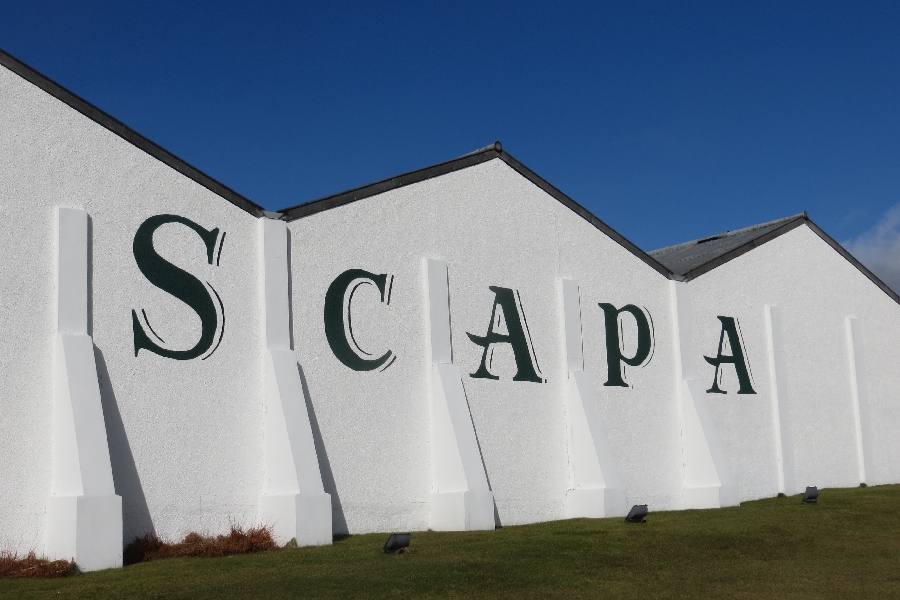
stop was the Scapa distillery which is just outside the town. There are two
distilleries, the other one Highland Park produces a peaty whiskey but the Scapa one uses
no peat in the drying and the water is piped direct from the spring, so that it does not
pick up peat flavours, which is fortunate for me as that is my preference. The
distillery is a fair size but even so does not malt its own barley and does not bottle its
own whiskey, although they used to in the past. They
concentrate now on the important production part in the middle. There was a
period when the distillery was not producing, and so most of their sales are relatively young
whiskeys, they have made a twenty year old. They do have a couple of barrels
left from the previous period but nothing in between. They showed us the oldest
barrel they have, but they have not decided yet when they will use it, maybe a 50 years
celebration. At the end we had a taster of the standard malt and we got to keep
the glass.
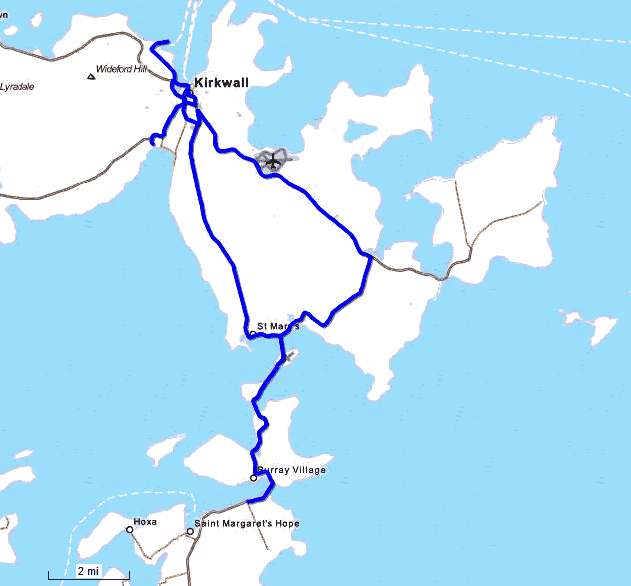
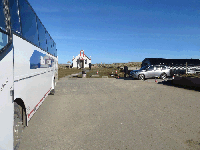 We then had a tour of the barriers and had the story of Scapa Flow, the blockships,
the sinking of the Hood and the making of thw Churchill barriers.. We drove
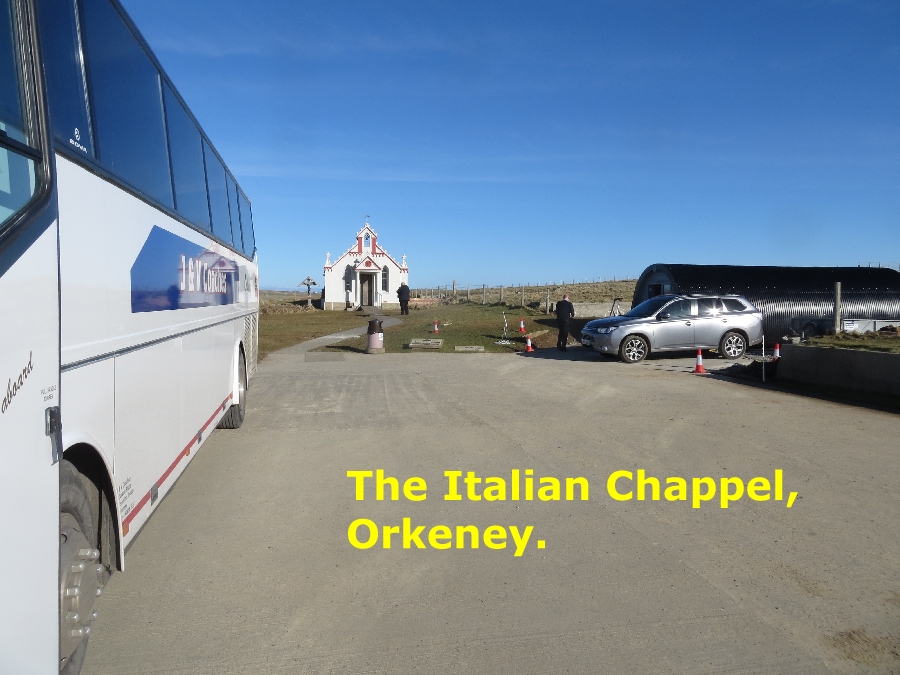
across the first one and stopped at the Italian Church and then continued on and crosssed
the other three to the bigger of the South Islands. We then returned to
Kirkwall where we had 30 minutes free time. The lower of the four Churchill
barriers had water on either side, like the others, when built; but now sand has built up
and there is about 100 yards of new sand dunes to the east.
[ top ] |